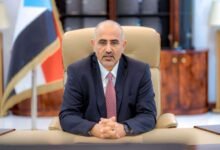

Al-Muharrami Discusses Economic Conditions and Improved Services with the Prime Minister

SMA NEWS – ADEN THE CAPITAL
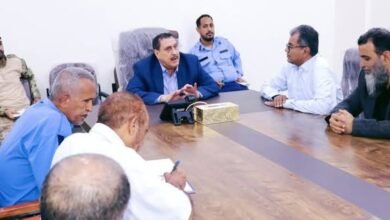
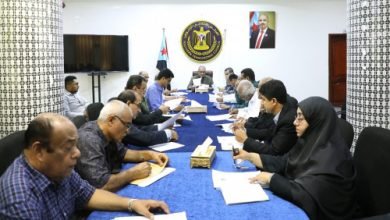
The Vice President of the Southern Transitional Council and member of the Presidential Leadership Council, Abdulrahman Al-Mahrami, met on Thursday, in the capital, Aden, with the Prime Minister, Salem Saleh bin Braik, to discuss economic and service developments and the challenges facing the government amid the continuing complex financial and economic situation.
The meeting discussed the government’s performance on economic reforms, the stability of the local currency, and the measures taken to ensure the sustainability of basic services, particularly in the electricity sector, amid the stifling crisis in the capital and several liberated governorates.
The meeting also reviewed the emergency arrangements approved by the Council of Ministers at its last meeting to secure emergency fuel supplies for power plants and provide the necessary petroleum derivatives to prevent the collapse of the electricity system and alleviate the humanitarian suffering of citizens.
During the meeting, Al-Mahrami reiterated his support for the government in its efforts to implement comprehensive reforms, improve economic and service performance, and overcome the challenges posed by the continued suspension of oil exports and the decline in public resources. He also reiterated his support for the government’s efforts to ensure the continuity of basic services and achieve financial and monetary stability, thus contributing to alleviating the burden on citizens and strengthening the state’s resilience in the face of current challenges.
For his part, the Prime Minister affirmed that the government is making every effort to maintain the stability of basic services, most notably electricity, despite the challenges associated with the suspension of oil exports and the decline in public resources. He also reviewed the government’s 100-day emergency plan, which aims to halt the sharp decline in the value of the local currency and fulfill the state’s obligations, most notably the payment of civil servant salaries.