
Under patronage of President Al-Zubaidi, Socotra celebrates the 62nd anniversary of glorious October 14 Revolution
SMA NEWS – HADIBOH
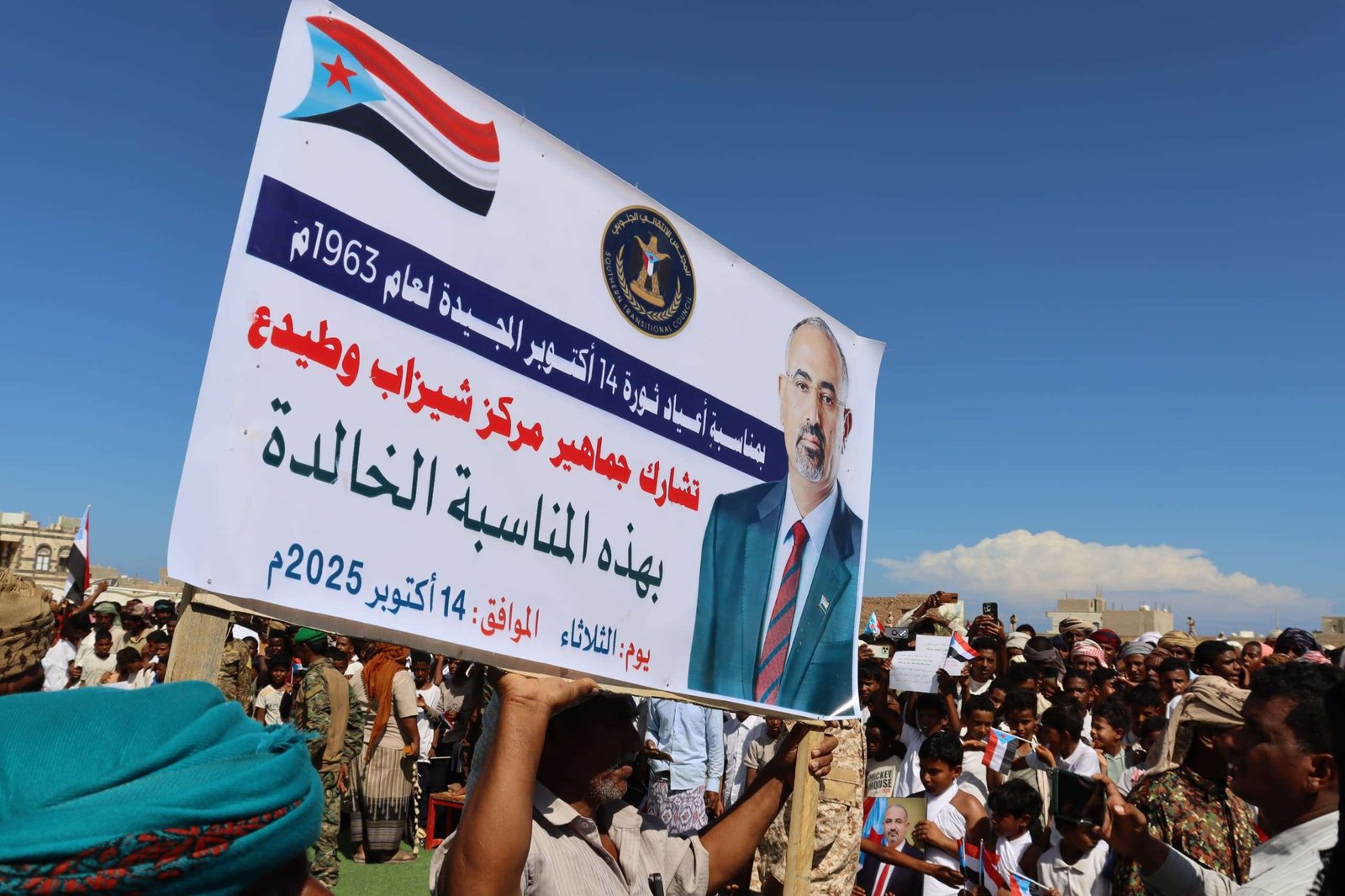
Socotra Governorate celebrated the 62nd anniversary of the glorious October 14 Revolution on Tuesday with a speech and artistic ceremony in the capital, Hadiboh. The ceremony was attended and participated by Governor Raafat Al-Thaqali, member of the Southern Transitional Council’s Presidency (STC), and Dr. Al-Khader Al-Saeedi, head of the Presidential Guidance and Oversight Team.
In his speech at the event, Al-Thaqali praised the great national significance embodied by the anniversary of the October 14 Revolution, emphasizing that it will remain an eternal symbol of the southern struggle and a beacon of freedom, sparked by the steadfast Radfan Mountains. He explained that the sacrifices of the free people who confronted colonialism and wrote epics of independence will remain a beacon for generations to follow.
The Governor of Socotra Governorate emphasized that celebrating this occasion in the various southern governorates, including Socotra, expresses a unity of purpose and destiny under the banner of the Southern Transitional Council and the leadership of President Al-Zubaidi, in which he emphasized that the South is steadily moving toward restoring its fully sovereign state.
For his part, the head of the Transitional Council in Socotra, Saeed Omar bin Qablan, emphasized that the 62nd anniversary of the October Revolution represents a national moment to renew the pledge and loyalty to the sacrifices of the martyrs and to the political leadership of the Southern Transitional Council. He emphasized that the people of Socotra remain steadfast on the path to freedom and sovereignty, adhering to their political and military leadership toward an independent future for the South. He called for strengthening the unity of the Southern ranks and prioritizing the supreme national interest.
The ceremony, which was attended by the governorate’s undersecretaries, directors of executive offices, military and security leaders, and social figures, sheikhs, and dignitaries, featured numerous artistic and heritage performances that embodied the authenticity of Socotri identity and the diversity of its popular heritage. The artistic troupes presented performances that were admired by the audience, reflecting the depth of national belonging and pride in the southern identity.